Pregnancy and the transition to parenthood can bring joy and excitement, but they can also be accompanied by significant emotional and mental health challenges. Perinatal mental health conditions, including depression and anxiety during pregnancy and after childbirth, are common and often go unrecognized or untreated. Factors such as isolation, financial stress, stigma, and lack of support can make these challenges even more difficult, affecting the well-being of both parents and their families.
FCA and our panel of experts recently spoke about perinatal mental health, how to recognize when a new or expecting parent may be struggling, and the importance of early intervention and support. We'll explored the barriers that prevent parents from seeking help, the role of family and community connections, and the resources available to support perinatal well-being. Attendees learned practical ways to support parents in your life and how families, healthcare providers, and community organizations can work together to ensure no-one faces these challenges alone.
Did you know there are tax credits and grants that may help adoptive families?
This is a preliminary list of resources to help prospective adoptive parents understand the costs involved in adoption and make it more affordable through grants, loans, employer benefits, and tax credits.
Tax Credits
Creating a Family Adoption Tax Credit: a tax credit for qualified adoption expenses (court fees, attorney fees, traveling expenses, general adoption agency fees) paid to adopt an eligible child and an exclusion from income for employer-provided adoption assistance.
Adoption Taxpayer Identification Number: If you are in the process of adopting a child and are able to claim the child as your dependent or are able to claim a child care credit, you may need an ATIN for your adoptive child. Internal Revenue Service Answers common questions about the ATIN, the temporary number assigned by the Internal Revenue Service to a child pending finalization of his or her adoption.
U.S. Federal Adoption Tax Credit: Families who adopt a child with special needs from foster care could claim a federal adoption tax credit even if there are no adoption expenses.
Grants & Loans
The Adoption Hope Foundation: Provides grants for families adopting from Connecticut, grants received range from $500 – $15,000
Adopttogether.org: Connects prospective adoptive families to available grants based on adoption status, actual adoption expenses, and donor designations
A Child Waits Foundation: Provides resources for families seeking grants and loans for international adoptions
National Council for Adoption: Includes information on a broad range of resources available to prospective adoptive parents
Help Us Adopt: Awards grants to qualified prospective adoptive parents
National Adoption Fund: Offers financial assistance, services, and support for families before, during, and after adoptions are finalized
Family & Children’s Agency Honors Community Leaders and Volunteers at Annual Meeting
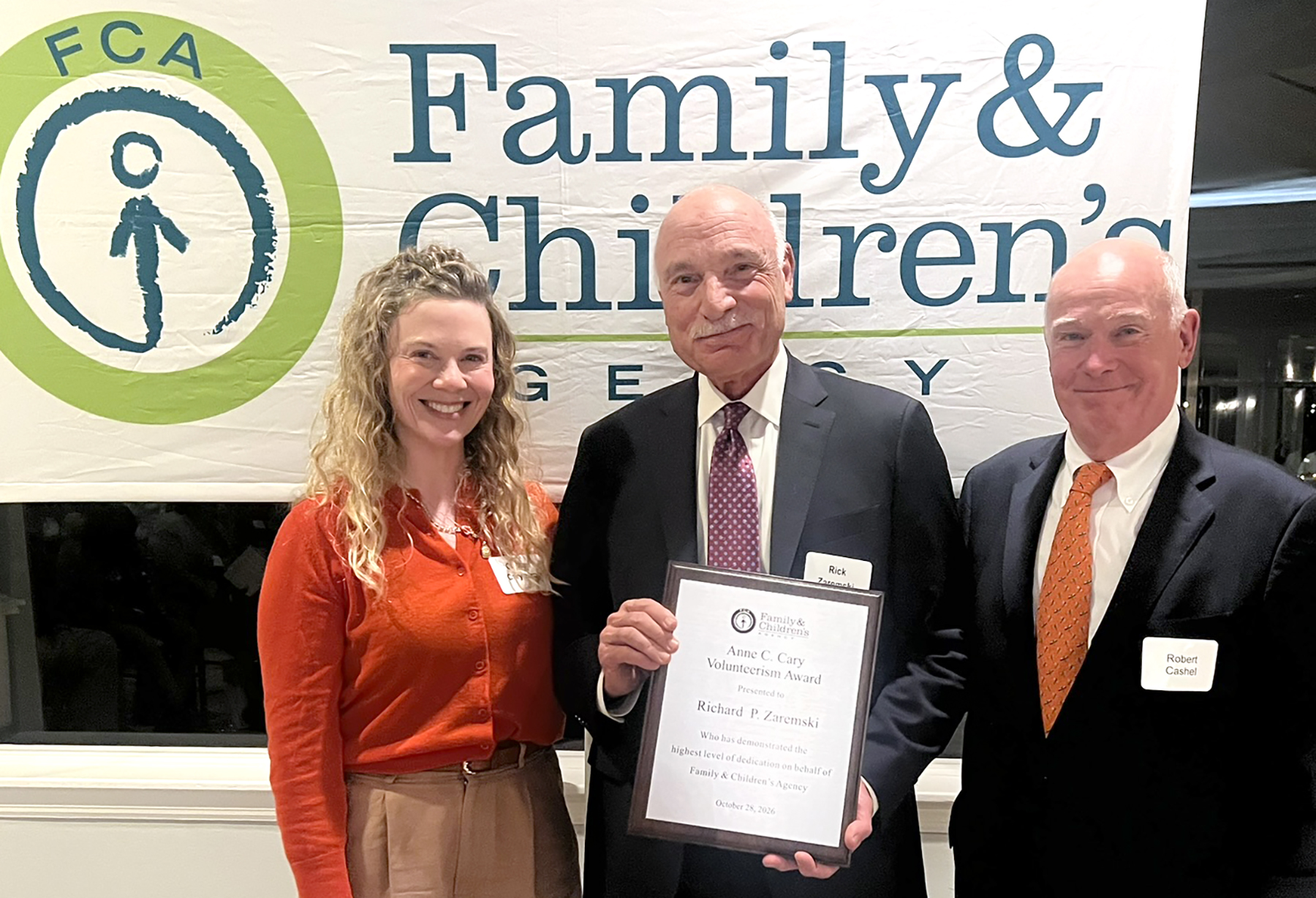
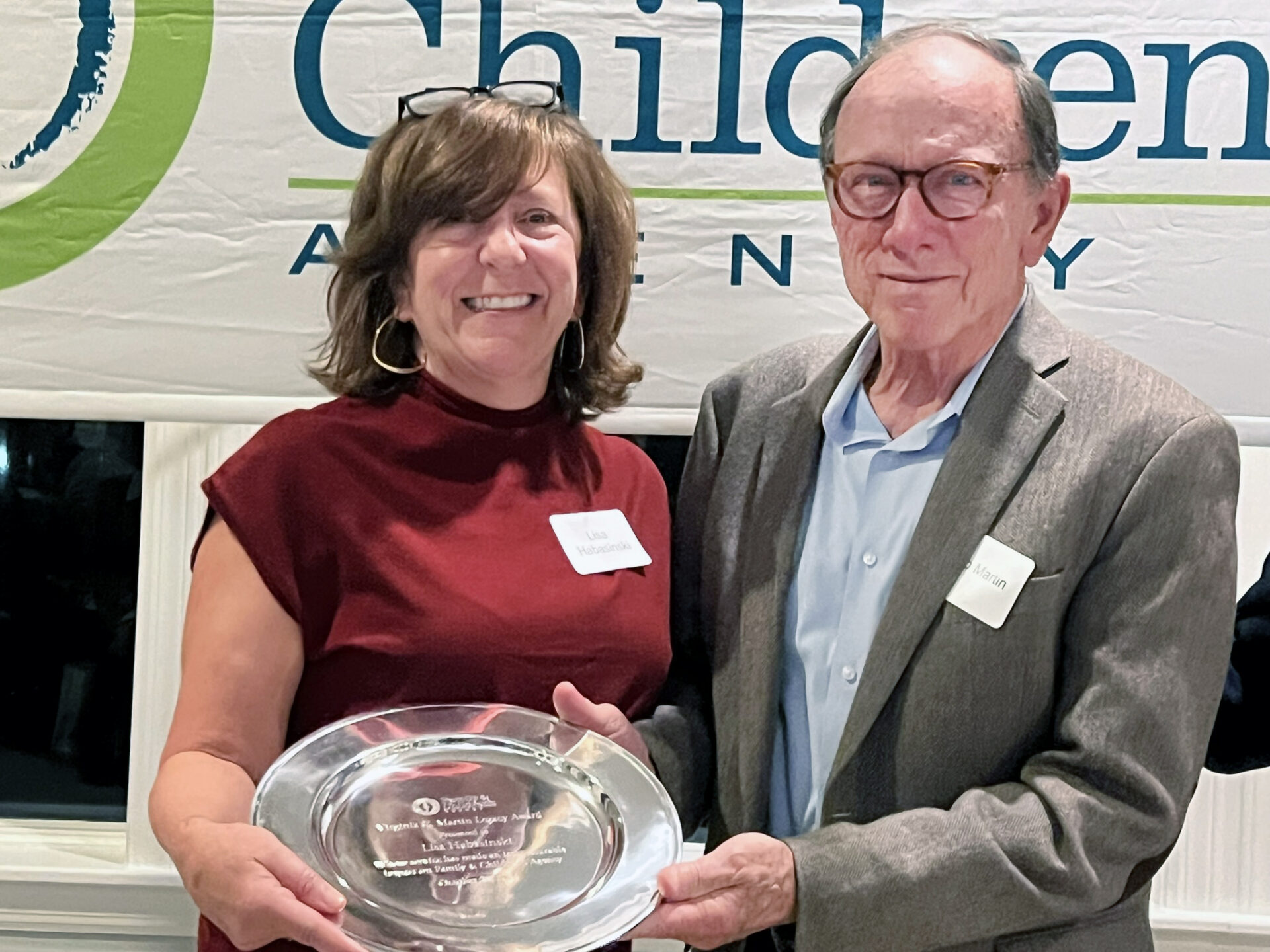
Norwalk, Conn., October 28, 2026 – Family & Children’s Agency (FCA) recognized three outstanding honorees during its 84th Annual Meeting held on October 28, 2026, celebrating the individuals whose leadership, volunteerism, and compassion strengthen families and communities across Fairfield County.
The William O. Murphy Family Strengthening Award was presented toKate Repen and the Ritter Family Foundation (pictured above). The Ritter Family Foundation has been among the most important and consistent funders of Family and Children’s Agency since 2018. As the Executive Director, Kate Repen has been an incredible supporter of FCA’s work with children and families. Not only has Kate been involved in the direct funding of the Agency, but she is a true partner in our work. Kate is at the table with FCA and other community leaders engaged in critical conversations about how we create a more equitable community where all Norwalk children have the opportunity to reach their greatest potential.
The Anne C. Cary Volunteerism Award was presented to Richard P. Zaremski, FCA Board Treasurer and resident of Norwalk, in recognition of his outstanding leadership, generosity, and longstanding commitment to FCA and the families we serve. Rick’s commitment to FCA has extended well beyond his Board responsibilities. Throughout his years of service, Rick has helped secure ongoing sponsorships and grant support from First County Bank, strengthening FCA’s ability to respond to the needs of children, families, adults, and seniors throughout our community. The award was presented by Colleen Cary Katz of Old Greenwich, FCA Board member and granddaughter of the award’s namesake, Anne C. Cary.
The Virginia C. Martin Legacy Award was presented to Lisa Habasinski, FCA Manager of Community Engagement, of Stratford. For nearly 30 years, Lisa has made an immeasurable impact on the Agency, working tirelessly across departments to connect staff with volunteers, secure program event sponsors, and build the relationships that strengthen our work and expand our impact in the community. Over the years, Lisa has helped bring people together around a shared purpose, making FCA stronger and our mission possible in countless ways. Her contributions cannot be measured simply by the volunteers she has connected or the events she has contributed to, but by the relationships she has built, the colleagues she has supported, and the lasting difference she has made.
“It takes the contributions of many for Family & Children’s Agency to serve the thousands of community members who benefit from our programs. We are so grateful to have honored three such people who have made a positive impact on the community through FCA,” said Robert F. Cashel, President & CEO of Family & Children’s Agency.
A Minks to Sinks Thank You
Another Minks to Sinks sale has come and gone, and we want to extend our heartfelt thanks to the Wilton community and everyone who helped make this beloved tradition another success!
Twice a year, the Minks to Sinks tent comes alive with thousands of donated and consigned treasures, enthusiastic shoppers and a remarkable group of volunteers working together for a common cause. Minks to Sinks is an incredible example of a community coming together to support our neighbors.
Thank you to the generous donors and consignors who filled the tent with everything from clothing and furniture to toys, household goods and unexpected treasures. And thank you to the shoppers who came out to hunt for bargains, give these items a second life and support a great cause. Together, you help reduce waste, promote reuse and make a meaningful difference in the lives of our neighbors.
Most importantly, we want to recognize the incredible volunteers and dedicated Minks to Sinks members who make this event possible. From setup to cleanup, from collecting and sorting donations to assisting shoppers, the work that goes into each sale is enormous. Their generosity, energy and countless hours of hard work are what make Minks to Sinks such a special tradition and this event would not happen nor could we do it without them.
Proceeds from Minks to Sinks benefit Family & Children’s Agency (FCA), helping provide essential services to children, families, adults and seniors throughout our community. Every donation, every purchase and every volunteer hour helps make that work possible.
For generations, Minks to Sinks has brought people together around the simple idea that giving back can be good for our neighbors, good for the environment and a lot of fun. We are grateful to everyone who continues to embrace this tradition and make it such an important part of our community.
Thank you, Wilton, for another wonderful sale. We look forward to seeing you under the tent again in the spring!
Amy Cooper and Amy Foodman Minks to Sinks Co-Chairs
Robert F. Cashel President and CEO Family & Children’s Agency
Clarissa Cannavino and Brigitte Mansourian Join Board of Directors
Norwalk, Conn. – Family & Children’s Agency (FCA) has welcomed Clarissa Cannavino of Wilton and Brigitte Mansourian of Darien to its Board of Directors, adding their expertise in law, governance, fundraising, and community engagement to the Agency’s leadership.
“We are very pleased to welcome Clarissa and Brigitte to FCA’s Board of Directors,” said Robert F. Cashel, President & CEO of Family & Children’s Agency. “They each bring valuable experience, strong community connections, and a genuine commitment to FCA’s mission and will bring important perspectives to our Board as we continue to respond to the evolving needs of the individuals and families we serve.”
Cannavino is a senior legal executive with extensive experience in regulatory, governance, business development, and transactional matters. She currently serves as Chief Business Development and M&A Counsel for Synchrony and previously worked at GE Capital. Her community leadership has included serving as Chair of the Fairfield County Bar Foundation and President of the Wilton Children’s Theater Association. She currently lives in Wilton with her husband and their four sons.
“I joined the Family & Children’s Agency Board because I am deeply committed to supporting children, families, and the community, and this organization provides critical services that strengthen lives and help families move forward,” said Cannavino.
Mansourian brings extensive community involvement and a longstanding connection to FCA. Since 2022, she has served as Co-Chair of FCA’s annual Mother’s Day Tea, helping grow an event that brings community members together while raising critical funds for the Agency’s programs and services.
She has also held numerous school leadership roles and served as Co-Chair of Hope Chest, a Fairfield County holiday gift drive benefiting children in foster care. Her volunteer experience includes work with The Community Fund of Darien and Person to Person. Earlier in her career, Mansourian worked in finance and IT recruiting after graduating from Wheaton College. She currently lives in Darien with her husband and their three children.
“I've always believed strong families build strong communities, and the Mother's Day Tea showed me how much heart this organization puts behind that belief. Serving on the FCA Board felt like a natural next step, a way to help grow the fund development efforts that keep these programs thriving for the families and children who need them most,” said Mansourian.
FCA’s Board of Directors provides governance and strategic leadership as the Agency works to meet the evolving needs of children, families, adults, and seniors throughout Fairfield County. Cannavino and Mansourian will bring complementary experience in corporate leadership, community engagement, and philanthropy to that work.
When a Good Income Isn’t Enough: The Cost of Living for Fairfield County Families
In Fairfield County, one of the wealthiest areas of the country, it can be easy to assume that financial hardship is something that happens somewhere else. But the high cost of living in Fairfield County is putting increasing pressure on working families, including many who appear financially secure from the outside.
The 2026 State of ALICE in Connecticut report found that 39% of Connecticut households struggled to afford basic necessities in 2024. That includes 11% of households living below the federal poverty level and another 28% classified as ALICE, Asset Limited, Income Constrained, Employed. These are families who are working and earning above the poverty line but still do not make enough to cover the basic cost of living where they live.
For Claudia Maldonado, an FCA staff member, those numbers brought to mind one particular family.
“On paper, they looked totally fine,” she remembers. “Two working parents, two kids, and a combined income that most people wouldn't think twice about.”
But on paper and in real life were two very different things.
After paying rent, utilities, groceries, gas, and the other expenses that came with raising two children in Fairfield County, there was almost nothing left. The parents had begun relying heavily on credit cards simply to keep up. Their children were missing out on after-school sports and activities because there was simply no room left in the family budget.
They weren't unemployed or experiencing one catastrophic emergency. They were doing what families are told they are supposed to do: working, paying their bills, and taking care of their children.
And they were still falling behind.
There wasn't one program or one check that could suddenly solve everything for this family. Instead, FCA staff began looking for places where they could relieve some of the pressure.
They connected the family with an area nonprofit for help with groceries which freed up money in the household budget for other necessities. Then another organization helped explore a fair lending option so they could begin moving away from high-interest credit card debt.
And through a relationship with Norwalk Recreation and Parks, the children were able participate in local sports and activities the family otherwise could not afford.
None of those interventions alone transformed the family's finances. Together, though, they made a meaningful difference.
“They gave them some room to breathe,” Claudia recalls.
And perhaps even more important was how the family received the help.
“We didn't just hand them a sticky note with a bunch of phone numbers. We helped them navigate the paperwork and the systems.”
That distinction is at the heart of the work FCA and other community organizations do every day.
This family's experience stayed with Claudia because it challenged a common assumption about what it takes for a family to make ends meet in Connecticut. A household income approaching six figures may sound comfortable. But the new ALICE data helps illustrate just how misleading that assumption can be, particularly in a high-cost region like ours.
So how much does a family actually need to live in Connecticut? The answer may be surprising In 2024, the ALICE Household Survival Budget for a Connecticut family with two adults, an infant, and a preschooler was $116,304 a year. That is the amount United For ALICE estimates a household would need simply to cover essentials including housing, child care, food, transportation, health care, technology, taxes, and a small allowance for miscellaneous expenses. The report found that basic costs were highest in Connecticut’s Western Planning Region, which includes Fairfield County.
That helps explain how a family can have two working parents, a seemingly strong household income, and still find itself one unexpected expense away from trouble. A car repair, medical bill, rent increase, or other added financial burden can turn into a crisis.
“Our job wasn't to lecture them on budgeting,” Claudia said. “It was about seeing the pressure they were under and connecting the dots between local groups that could help.”
That is especially important in communities like Fairfield County, where extraordinary wealth can make financial hardship less visible.
Families who are struggling may live down the street from families with tremendous resources. They may have jobs, cars, homes, and children in local schools. They may not qualify for programs traditionally associated with poverty. And they may feel as though they should be able to make everything work on their own, but the ALICE data tells us that they are far from alone.
Across Connecticut, nearly 570,000 households were unable to consistently afford the basic cost of living in 2024. More than twice as many Connecticut households were ALICE as were living below the federal poverty level.
For community organizations, that is an important reminder that helping families become more stable does not always mean providing one large intervention. Sometimes it means knowing which resource can help with groceries, which organization can address debt, which program can give a child an opportunity, and how to help a family navigate all of those systems.
“That’s really what I love about Family & Children’s Agency,” said Claudia. “Sometimes our impact comes from a direct service, but just as often, it’s about making sure people don't have to fight a complicated, expensive system completely on their own.”
In a community with tremendous resources, one of our greatest strengths is the network we can build between them.
For families living on the financial edge, those connections can provide something enormously important: a little more stability, a little less pressure, and the knowledge that they don't have to figure it all out alone.
A new backpack, sharpened pencils, and fresh notebooks may be the most visible signs of back-to-school season, but helping a child start the school year successfully means much more than checking items off a supply list.
Children and teens do their best in school when they have consistent routines, enough sleep, a place and time to complete schoolwork, access to nutritious food, and adults they can turn to when something feels difficult. As families settle into a new school year, a little preparation can make the transition easier for everyone.
For Younger Students: Build Predictability
For elementary-age children, routines can provide a sense of security and make busy mornings and evenings less stressful.
Start with sleep. Move bedtime back to a school-year schedule and try to keep bedtime and wake-up times consistent, even on weekends. Create a calming bedtime routine that limits screens and gives children time to wind down.
Make mornings easier the night before. Choosing clothes, packing backpacks, and preparing lunches in advance can reduce morning stress. A simple checklist can also help younger children begin taking responsibility for getting themselves ready.
Create a homework routine. Choose a regular time and reasonably quiet place for reading and homework. For younger students, short periods of focused work with breaks may be more effective than expecting them to sit for a long stretch.
Talk about the school day. Instead of simply asking, “How was school?” try questions such as “What made you laugh today?” or “Was anything hard today?” Regular conversations help children know that both their successes and challenges are important.
For Middle and High School Students: Encourage Independence With Support
Older students may want more independence, but they still benefit from structure and adult involvement.
Protect their sleep, too. Homework, activities, jobs, social media, and phones can all push bedtime later. Encourage teens to build a realistic evening routine and put devices away before bed.
Help them develop their own system. Planners, phone calendars, assignment apps, and weekly check-ins can help students keep track of homework, tests, sports, activities, and other responsibilities. The goal is not for parents to manage every assignment, but to help students learn how to manage themselves.
Establish a homework plan before the workload builds. Talk about when and where schoolwork will happen and what to do when a student feels overwhelmed or does not understand an assignment. Asking a teacher for help, attending extra help, or finding tutoring early can prevent a small problem from becoming a larger one.
Leave room for downtime. Students need time that is not scheduled. Balancing academics, extracurricular activities, work, friends, and family can be difficult, particularly for teens. Rest and recreation are part of a healthy routine, not a reward for finishing everything else.
Keep conversations open. Adolescents may not always initiate conversations about stress, friendships, anxiety, or school pressure. Regular, low-pressure opportunities to talk can make it easier for them to come to an adult when they really need help.
When the Challenge Is Bigger Than a Routine
Sometimes a difficult start to school has little to do with organization.
A child cannot concentrate on homework when they are hungry. A student may avoid school because they do not have appropriate clothing. Anxiety, depression, family stress, bullying, housing instability, or financial hardship can also affect attendance, behavior, and academic performance.
Families should know that asking for assistance is part of helping a child succeed.
Here in Fairfield County, there are organizations ready to help:
Family & Children's Agency (FCA) offers behavioral health services for children and teens age 5 and older, including individual and family therapy for concerns such as anxiety, depression, grief, family challenges, and life transitions. FCA's ASPIRE program also supports eligible Norwalk middle and high school students through academic support, enrichment, social-emotional development, case management, and college and career preparation.
Filling in the Blanks helps address childhood hunger by providing weekend meal bags to students and operates additional programs including mobile and school-based food pantries.
Person to Person provides food assistance and other basic-needs support in Lower Fairfield County. Its services include food pantries, caseworker assistance, and a Clothing Center offering new and gently used clothing and shoes at no cost.
Connecticut 211 is another important starting point when families are not sure where to turn. The free, confidential service connects Connecticut residents with local resources for food, clothing, housing, child care, mental health services, after-school programs, and many other needs. Families can dial 2-1-1 or search based on their location and specific need.
Families can also reach out directly to their child's teacher, school counselor, social worker, or school administration. Schools may be able to connect families with tutoring, meal programs, clothing and school-supply assistance, mental health supports, and other community resources. Connecticut 211 specifically recommends contacting a child's school when a family needs assistance with school clothing or supplies.
Start the Year With the Whole Child in Mind
Back-to-school preparation does not have to mean creating a perfect schedule or buying everything on a supply list. It means helping children feel rested, prepared, supported, and ready to learn.
Establish routines where you can. Check in often. Pay attention when a child's behavior changes. Ask for help early when something is getting in the way. And have a great school year!
30th Anniversary Golf Classic
Brooklawn Country Club 500 Algonquin Road Fairfield, CT 06825
We are thrilled to share that Family & Children’s Agency (FCA) will be hosting our annual Golf Classic on Monday, September 28 at Brooklawn Country Club in Fairfield, CT. This year is special as we celebrate 30 years of this event and gathering with friends, enjoying a fantastic day of golf, and supporting the crucial work of FCA.
The Golf Classic has become a cornerstone fundraiser for FCA, providing essential support for our wide range of services and your participation as a sponsor is vital to the success of this event.
To be listed as an early patron on the invitation, please pledge your support by July 17, 2026.
FCA is fortunate to have incredible and dedicated volunteers helping with everything from events and fundraising to tutoring and organizing donation drives. This Volunteer Appreciation Month we are highlighting just a few of these incredible people. Today, meet Kayla, a volunteer who has organized donation drives including cleaning products, food and gift cards, formal-wear for our prom closet, diapering supplies, hygiene products, and more.
What first brought you to FCA, and what made you decide to volunteer? I wanted to be part of something that creates real change, not just good intentions. FCA stood out as a place where even the smallest effort can make a real difference.
How would you describe your volunteer role to someone who’s never heard of it? I help transform everyday donations into support that families can truly feel. Whether it’s essentials, formal wear, or baby items, it’s about making life a little easier and brighter for someone else.
What’s a moment that’s stayed with you, something that reminded you “this matters”? At the end of last summer, we handed out over 200 backpacks filled with supplies. Knowing those bags were going to students who needed them made the impact feel tangible.
What do you wish more people understood about FCA or the people we serve? That anyone can need help at some point—it’s not about being different, it’s about circumstances. Even one small gesture can carry more meaning than you realize.
How has volunteering affected you personally (skills, perspective, relationships, purpose)? It has pushed me to take initiative and inspire others to get involved. I’ve learned that leadership can start with something as simple as showing up.
Has your volunteer work taught you anything you'll bring to your work and school in the future? It’s taught me to go for it without overthinking the outcome. A “no” doesn’t matter nearly as much as the opportunities you create by just asking.
Volunteer Appreciation Month: Nea
FCA is fortunate to have incredible and dedicated volunteers helping with everything from events and fundraising to tutoring and organizing donation drives. This Volunteer Appreciation Month we are highlighting just a few of these incredible people. Today, meet Nea, a Minks to Sinks Volunteer for more than 65 years!
What first brought you to FCA, and what made you decide to volunteer?
Back when I joined, Minks to Sinks was a smaller group of women putting on a tag sale to help many nonprofits. In the 80’s we partnered with FCA so that donations would go directly to the Agency. I enjoyed working with the great group of women and loved having people find bargains under the tents.
How would you describe your volunteer role to someone who’s never head of it?
Minks to Sinks is a group of women from Wilton who organize and run two large tag sales each year. My role had been cashier at the sale, chairperson of luggage and lamps, scheduler of volunteers when it was done by hand on paper (figuring out who would be filling in various positions for the lead up to the sale and during the sale). Now I help with updating posters and lunch for the women during set up.
What’s a moment that has stayed with you, something that reminds you that this matters?
The number of individuals who line up at the wee hours of the morning so they can be under the tents first to find good deals. Those in need are getting what they need for their homes and families whether it be furniture, housewares or clothing. Everyone is getting a good deal and saving money.
What do you wish more people understood about FCA or the people we serve?
I wish more individuals knew who FCA was and how the Minks to Sinks sales helps to benefit the programs with a monetary donation.
How has volunteering affected you personally?
I have volunteered for many years of my life in different capacities. Minks to Sinks seems to be my longest volunteer effort. Building new relationships though the years that have lasted a life time, creating many great memories and friendships.
You’ve seen FCA and Minks to Sinks change over time, what’s changed and what’s remained the same?
The change has been increasing in size. FCA has more programs as well as staff and the sales and Minks membership has increased a great deal. We are able to donate more to the agency. What’s stayed the same are the dates of the sale which are always the first weekend in May and October. Same green poster being displayed and same camaraderie amongst the members. The Agency still provides amazing services to the community.